
Inside Keweenaw County Tax Records
Tax records in Keweenaw County live in more than one drawer. Township assessors set the individual assessments, County Equalization keeps values uniform across jurisdictions and tracks parcel transfers, and the Treasurer holds tax histories, delinquent-tax help, and certified answers. One screen never tells the whole tax story.
| Field | What It Shows | Where |
|---|---|---|
| Assessed value and SEV | Generally one-half of true cash value | Township assessor and Equalization |
| Taxable value | The value to which millage is applied | Assessment record |
| Class and transfer data | Property class and change context | BS&A and assessor |
| Tax history | Tax-year charges and status | County Treasurer |
| Delinquency or foreclosure | Current stage and amounts requiring confirmation | Treasurer and state process |
Keweenaw County treats assessed value and State Equalized Value as a share of what a property is worth on the open market. Both figures are typically set at half of true cash value. Taxable value works differently. It stays capped until ownership transfers or a qualifying improvement lifts the cap. From there, the math is simple. The tax bill equals taxable value times the millage rate set by the township or village. A sale price alone does not set the tax base. It is simply evidence of a transaction.
Keweenaw County Assessment Values
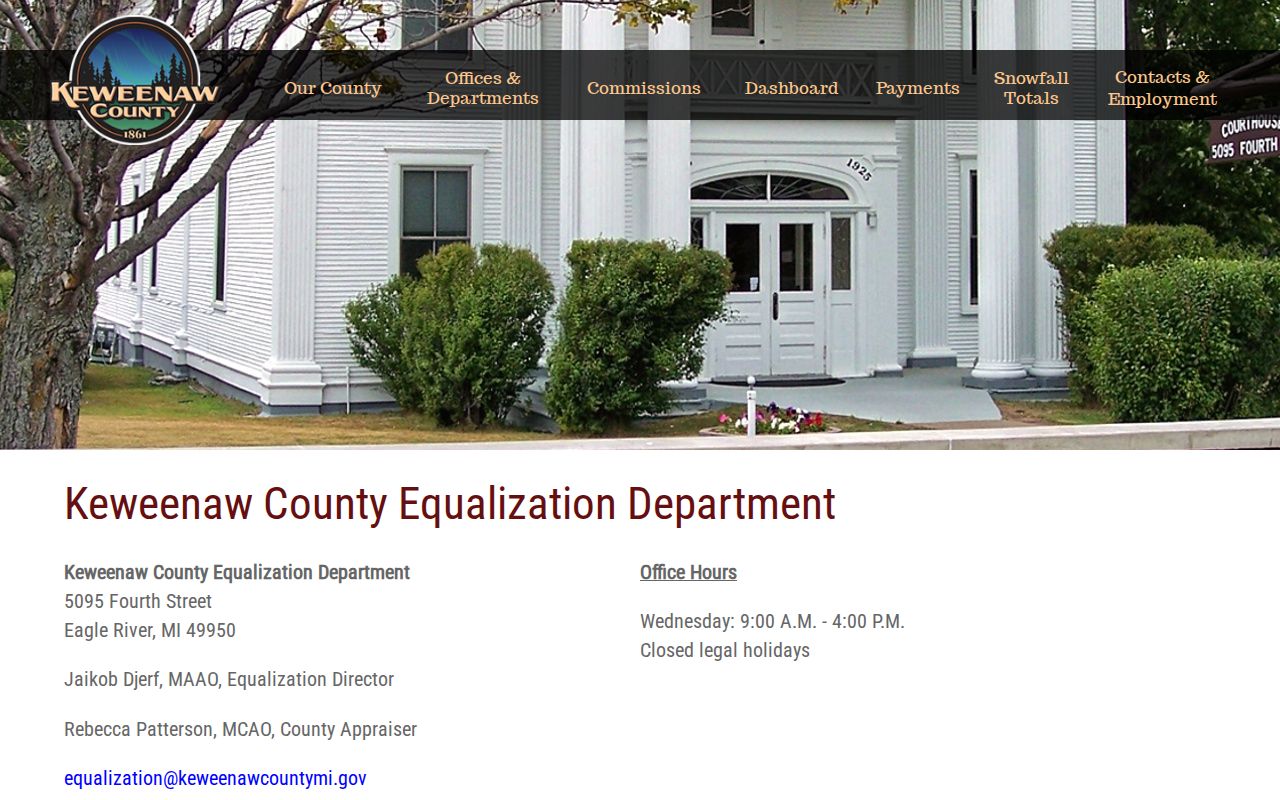
The Keweenaw County Equalization page spells out the value rule in plain terms. Picture a true cash value of $80,000. The assessed value would run about $40,000, even if a particular sale closed at $70,000. Why the gap? A single sale can be weak evidence. The parties may have lacked information. The transfer may have stayed within a family. The property may have been distressed, marketing may have been poor, or normal market exposure never happened.
That value rule plugs straight into the local assessment system. Taxable value can climb by inflation or five percent, whichever is smaller. A transfer uncaps it. New construction and qualifying improvements can shift the base too. When reviewing a parcel, keep separate notes on land value, improvement value, SEV, assessed value, taxable value, class, exemptions, transfer history, and the tax year. Each figure answers a different question.
Search Keweenaw County Property Tax
The county-specific BS&A Online portal opens with Address, Name, and Parcel Number tabs, plus Assessing Search, Property Sale Search, Delinquent Tax Search, and Detailed Record Search. The delinquent and detailed pages build their fields dynamically. Follow the live labels rather than assuming a date range, export control, or current balance appears.
The basic sequence stays simple. Pick Address, Name, or Parcel Number, enter one search string, and hit Search. Rural addresses sometimes behave better with and without directionals or suffixes. Parcel numbers should keep their punctuation and the county's 42 prefix. Save the search date, since assessment, transfer, and tax displays can change.
| Visible control | Input | Use |
|---|---|---|
| Address | Street search text | Start from a known site |
| Name | Owner or taxpayer name | Find possible parcels |
| Parcel Number | Complete identifier | Match the tax unit exactly |
| Delinquent Tax Search | Fields not verified | Open the live service, then confirm with Treasurer |
Verify a Keweenaw County Tax Bill
Before paying, a property tax search should lock in the parcel, year, value, and status. The Treasurer's official page is the direct route for a certified tax history or a balance that will not resolve online. Eric Hermanson serves as Treasurer at 5095 Fourth Street, Eagle River, reachable at 906-337-1625, with weekday hours from 9 to 4.
The official Keweenaw County Treasurer page also routes delinquent-tax and foreclosure-proceeds questions.
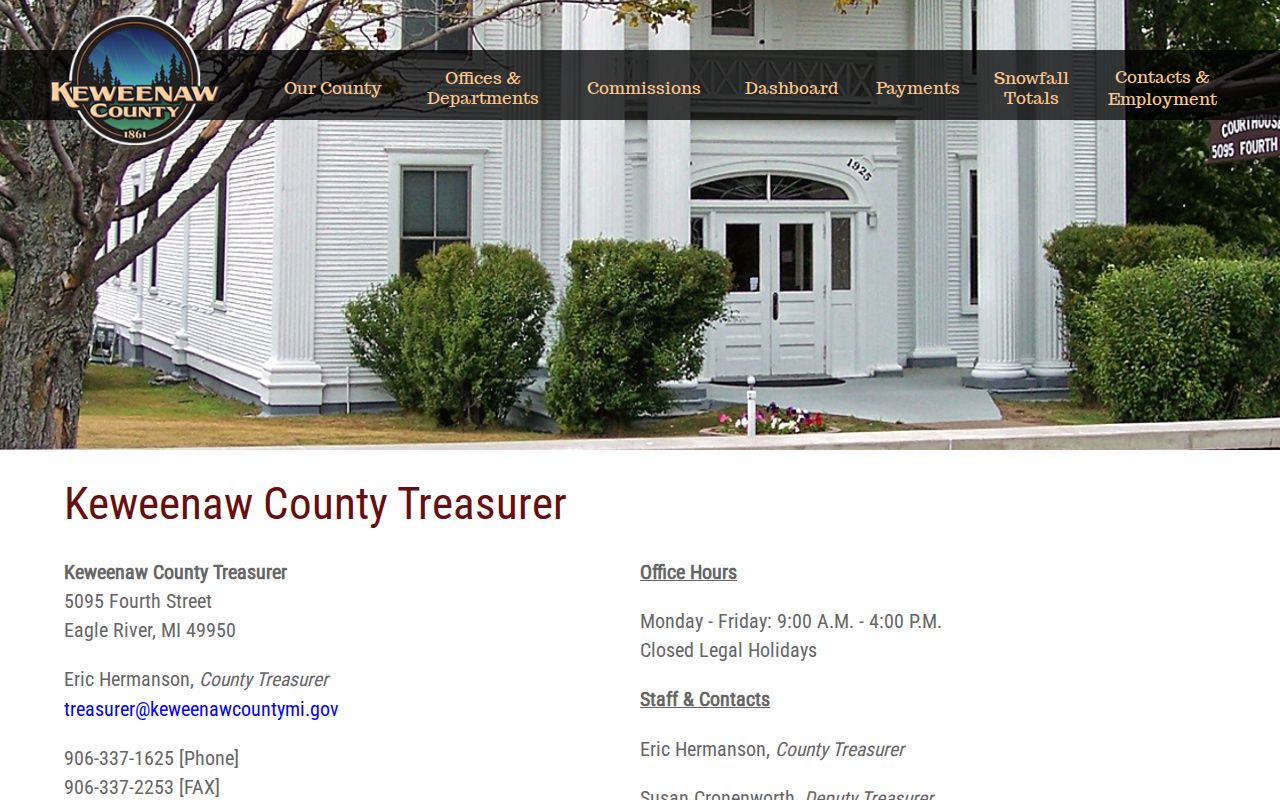
When a web value conflicts with a bill, or the question needs a certified history, the Treasurer's office page is the better handoff.
- Find the parcel in BS&A and copy its full number, tax year, and displayed values.
- Open the delinquent-tax service from the county portal, but record only fields and results that the live screen shows.
- Compare the assessment details with the Treasurer's tax history. Ask for certification when a closing, redemption, or legal matter depends on status.
- Before paying, confirm the parcel, year, amount, deadline, and responsible office.
- Assessed value
- The assessor's value, generally set at half of true cash value in Michigan.
- Taxable value
- The capped or uncapped base used with millage to compute tax.
- Millage
- A tax rate applied per thousand dollars of taxable value.
- Tax lien
- A claim tied to unpaid property tax that needs current status from the custodian.
Keweenaw County Payment Form Limits
The county-linked GovPros payment page is a payment form, not a parcel lookup. It walks through Payment Type, payer name, email, phone, billing address, payment amount, service fee, total, payment details, an agreement box, and Accept & Pay. The service fee is separate.
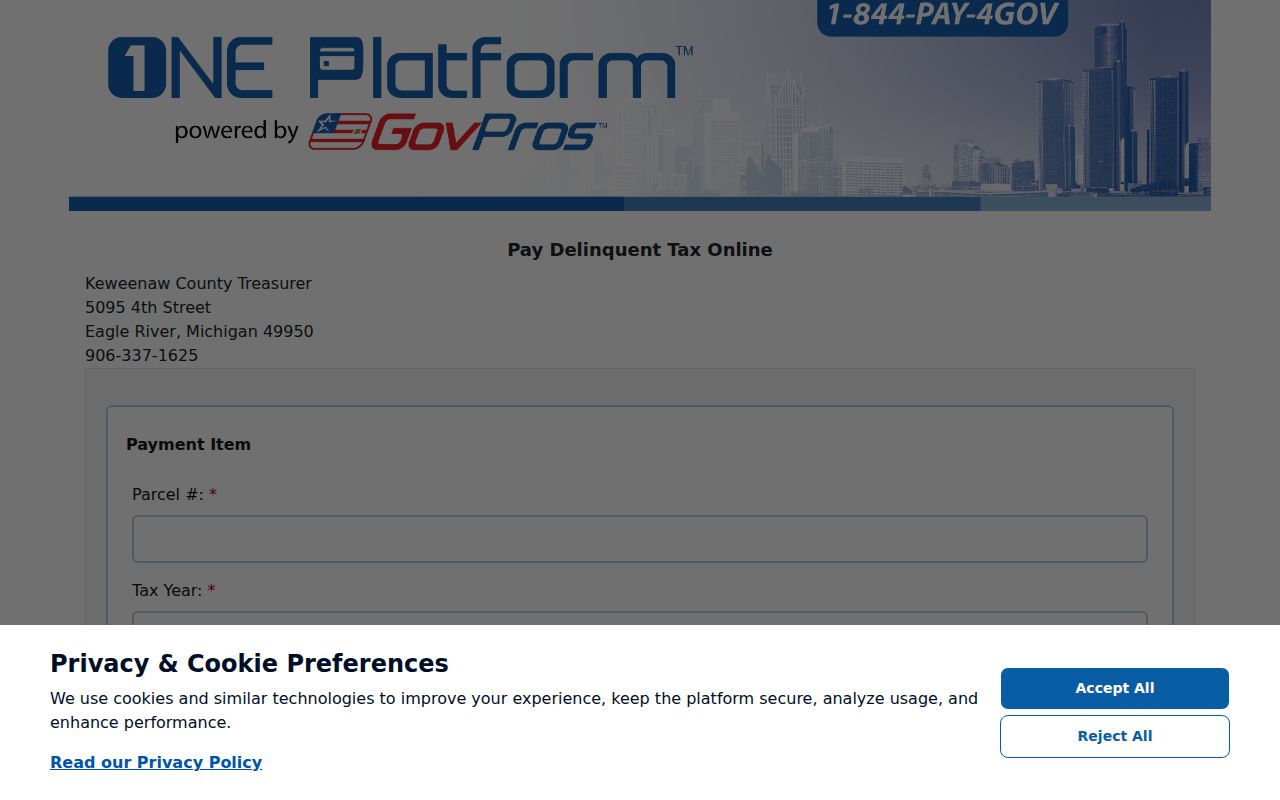
Verify the account before paying anything. Entering an amount proves nothing about which parcel or year was selected. Confirm the account and deadline with the Treasurer first. Then keep the confirmation, payment date, amount, fee, and method, and check that the official account posts the payment.
Six Keweenaw County Property Classes
Keweenaw County recognizes six real-property classes: agricultural, commercial, industrial, residential, timber cutover, and developmental. The BS&A sale search offers the same six choices alongside sale-date and sale-price ranges. Class matters when weighing assessment evidence. A residential parcel and timber cutover land respond to different market facts.
Use the current parcel class and a sensible date window. Then read each deed and its transfer conditions. Never assume a filtered sale was arm's length. Its price does not prove true cash value. The Keweenaw County property value page digs into what each value number means, while tax records remain the source for the bill and status.
Note: Comparable sales support an evidence file. One filtered result does not set a parcel's assessment.
Keweenaw Delinquency and Foreclosure
The BS&A delinquent-tax route is available for parcel-level delinquency lookups.
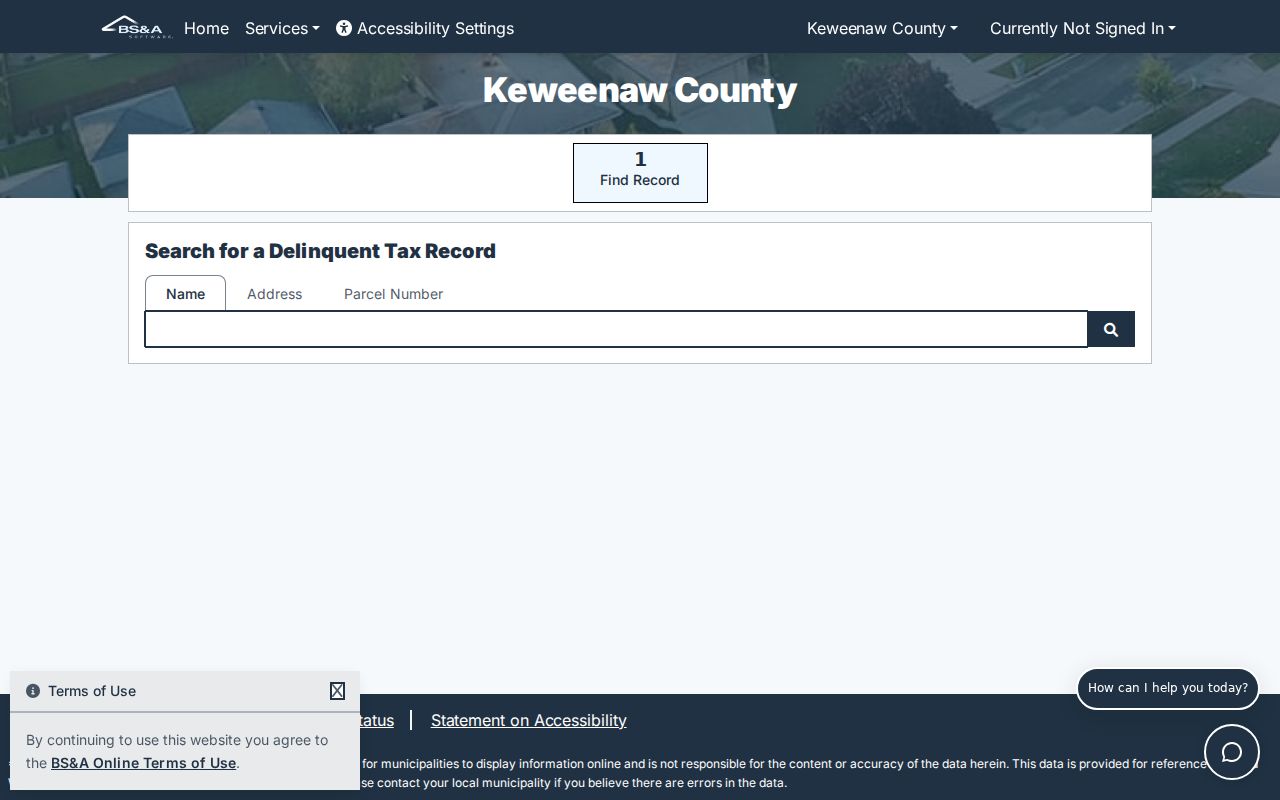
That route is a lookup tool, not a certified parcel balance. Michigan runs a three-year statutory foreclosure process under MCL 211.78a through 211.78m. Taxes turn delinquent in the first year. Forfeiture follows in the second. Judgment, redemption expiration, and auctions can occur in the third. The State Treasury handled Keweenaw foreclosures from 2018 through 2020. That historic assignment says nothing about a current year. Ask the Treasurer who holds responsibility now.
Historic Keweenaw County Tax Rolls
A parcel number only reaches back so far. For older years, the tax roll is often the thread. The Archives of Michigan Keweenaw guide maps what survives. Township tax rolls run from 1857 through 1940. County rolls cover 1941 through 1956. Delinquent rolls span 1944 through 1952, all within record group RG77-106. Some of the material is available through Michigan Tech. The 1936 through 1938 Rural Property Inventory adds land-use context for those depression-era parcels.
Treat a tax roll as a clue, not a deed. For a given year it may name the assessed taxpayer or hint at occupancy. But title itself must come from the recorded deed chain. When citing a roll, record the record group, series, date, repository, and page. Then match the name and description against conveyances in the deed records. That habit keeps a promising historical lead from hardening. It stops an ownership claim nobody can support.
Keweenaw Tax Research by Office
Keweenaw County tax research stalls most often at the counter, not the archive. The problem is the question landing at the wrong office. The township assessor sets the individual assessment. County Equalization handles uniformity, names and addresses, transfers, parcel maps, and value questions. The Treasurer answers for tax histories, deed certification, delinquency, payment, and foreclosure proceeds. The Register of Deeds holds the land instruments. So a recorded lien or odd transfer explanation lives there. Match the question to the desk and the work moves.
One concise request saves a round trip. Include the full parcel ID, township or village, tax year, the value or payment field in dispute, your source date, and whether certification is required. Recent transfer? Give the deed recording date and instrument number. Split or combination involved? List every related parcel number. Sorting these apart keeps an assessment correction, a tax payment, and a title question from tangling into one unresolved mess.
Keweenaw County Tax Evidence
A durable property tax record is a dated bundle, not a single screenshot. Save the portal URL, the search mode, and the terms. Record the tax year and the parcel number too. Add the class, land and improvement values, and assessed value. Include SEV, taxable value, and transfer details. Note the exemption labels and the source of payment status. Write down every field that failed to render. Keweenaw County figures are only as strong as their documentation.
Keep fact separate from inference. "BS&A displayed a taxable value on the search date" is a portal snapshot. "The account is paid through today" requires current confirmation. "The assessed taxpayer owns title" needs the latest recorded conveyance from the deed records. Labeled this way, the file serves a purchase review or a correction request. It also supports a historic study or an assessment meeting. The file never asks one record to prove more than it can.
Note: Save the source date beside every Keweenaw County property tax figure. Value and payment systems can update on different schedules.
Review Keweenaw County Assessments
Keweenaw County publishes no complete Board of Review calendar, appeal form, or deadline. That gap stays visible. Ask the responsible township assessor and County Equalization office for the current tax year's instructions, accepted evidence, and meeting dates. Be clear on what belongs before the Board of Review versus the Michigan Tax Tribunal.
Build a dated evidence file for the appeal itself. Print the assessment card. Pull comparable sales from the county's sale search. Confirm class and market area. Read the deeds for transfer conditions. Note any physical, access, shoreline, or improvement differences between parcels. County Equalization lists 906-337-3471, equalization@keweenawcountymi.gov, and Wednesday office hours of 9 to 4.
Confirm the current window. No verified deadline was captured. Contact the township assessor and Keweenaw County Equalization before relying on a prior-year schedule.